
Apple CEO Tim Cook's strategic pivot, from initial rejections to local partnerships and leveraging government policies like PLI, transformed India into a major iPhone manufacturing and export hub, now accounting for one in every four iPhones assembled globally.

The big question is whether Trump is any longer in command of the situation. For all practical purposes, the war seems set to cascade as the US is preparing for a potential ground operation in Iran and threatens to destroy 'bridges next, then electric power plants', points out Ambassador M K Bhadrakumar.

From the Sensex firms, Bharat Electronics, Mahindra & Mahindra, Titan, NTPC, State Bank of India, Adani Ports, Tata Motors Passenger Vehicles and Bajaj Finserv were among the major laggards. Tata Consultancy Services, ICICI Bank, Infosys and HDFC Bank were among the gainers.

'Pakistan's is the only military-controlled nuclear weapons programme in the world.' 'As people get radicalised, the risk of a brigadier or pilot taking matters into their own hands is a real concern.'

The Athletics Federation of India (AFI) has revealed that a significant majority of synthetic tracks in the country are substandard, raising concerns about athlete performance and track longevity. The AFI is now working with World Athletics to improve track certification and vendor quality.

16 days into the war, US forces were already running out of ground-attack missiles and Israel is about to expend its entire Arrow interceptor missiles by end March. To be sure, the Iranians are watching closely and that explains their defiant stance that 'Iran will end the war when it decides to do so and when its conditions are met', notes Ambassador M K Bhadrakumar.

Analysts predict that developments in West Asia and their impact on crude oil prices will heavily influence investor sentiment in the upcoming week. Global market trends, foreign investor activity, and rupee-dollar movement will also play a role.

WPI inflation data, trading activity of foreign investors and global cues would dictate trends in the stock market this week, analysts said.

Indian markets on Dalal Street rallied sharply as easing tensions in the US-Iran conflict and stable oil prices boosted sentiment. Track Nifty 50 and BSE Sensex performance and key global triggers.

Despite India's electric passenger vehicle market experiencing an 83.6% year-on-year surge in FY26, new foreign entrants VinFast and BYD have significantly outpaced Tesla, which struggles with high import duties, a limited retail footprint, and a lack of local manufacturing commitment.
Indian stock markets tumbled sharply with the Sensex falling 800 points and nearly 4 lakh crore wiped out in a single session. Here are the 6 key factors, including rupee weakness and global cues, behind the crash.
Benchmark indices Sensex and Nifty tumbled in early trade on Friday after a two-day rally, tracking a weak trend in global peers, as the US-Iran conflict continues to be a key overhang for the markets. Track Sensex, Nifty50 movement and key market drivers for March 27, 2026.

Investigation into alleged religious conversion and sexual harassment at a Nashik branch of TCS reveals that seven male accused operated as an organised gang to target female employees.
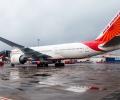
Indian carriers have cancelled over 10,000 flights since the onset of the West Asia conflict, as escalating tensions and airspace restrictions disrupted international operations, a senior government official said.

Indian markets on Dalal Street rallied sharply as easing tensions in the US-Iran conflict and stable oil prices boosted sentiment. Track Nifty 50 and BSE Sensex performance and key global triggers.

Araghchi remarked that US messaging currently echoes the Vietnam War-era "Five O'Clock Follies," suggesting a systematic misrepresentation of military progress.

Indian hotel companies are experiencing a sharp correction in share prices due to the Iran war and broader geopolitical tensions, leading analysts to cut operating profit expectations and valuations, despite structurally positive medium-term prospects.
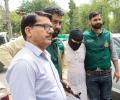
Delhi Police have arrested a suspected Lashkar-e-Taiba (LeT) handler, Shabir Ahmed Lone, in Delhi, uncovering a terror module with links to Pakistan's ISI. Lone is accused of running a network involved in pasting anti-national posters and planning terror activities across India.

Domestic institutional investors, on the other hand, made a net investment of Rs 1.13 trillion during this period.
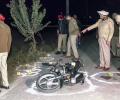
Punjab Police have arrested two more individuals allegedly involved in the recent blast outside the BJP headquarters in Chandigarh, bringing the total arrests to seven. The suspects are believed to be part of an ISI-backed module taking instructions from handlers in Germany and Portugal.

The conflict may disrupt Budget 2026-2027 projections, squeezing revenues and raising subsidies, prompting fiscal adjustments and potential reforms, echoing lessons from the Covid-era shock, points out A K Bhattacharya.

Amidst escalating tensions in West Asia, Russian President Vladimir Putin is actively calling for de-escalation and political resolution, engaging with Iranian and US counterparts to navigate the complex conflict landscape.

'In a volatile global market, India is pursuing a low-risk, low-return policy, akin to a SIP -- slow, steady investment.' 'Pakistan is following a high-risk, high-return policy.'
Punjab Police have arrested two more individuals allegedly involved in the recent blast outside the BJP headquarters in Chandigarh, bringing the total number of arrests to seven. The accused are believed to be part of an ISI-backed module taking directions from handlers in Germany and Portugal.
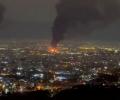
To be sure, Trump is furious, as the trajectory of the war is in a state of Zugzwang, as chess players call it. Trump and Netanyahu stare at two choices -- retreat in humiliation and concede Tehran's demands -- recognition of its rights, reparations, and binding security guarantees -- or perish in a quagmire, points out Ambassador M K Bhadrakumar.

Unified Payments Interface (UPI) transactions in India reached a record high in March, driven by increased adoption and global expansion. The system now accounts for 85% of digital transactions in India and is live in eight countries.
Unified Payments Interface (UPI) transactions in India reached a record high in March, with 22.64 billion transactions, marking a significant increase from the previous year and highlighting the growing adoption of digital payments.

But selectively, with regulatory scrutiny and special approval, points out Tamal Bandyopadhyay.

US President Donald Trump's threats against Iran have drawn strong condemnation from Democrat leaders, who are calling for his removal from office, while some Republicans express concern.

Border trade between India and China through the Lipulekh Pass in Uttarakhand's Pithoragarh district is set to resume this year after a six-year hiatus due to the COVID-19 pandemic.

Saudi Arabia and the UAE are actively pushing Trump to take the war to its bitter finish and 'erase' Iran's presence in the geopolitics of the region. Simply put, the two most powerful Sunni Arab oligarchies are on the same page as Israel. Such interference increases the risk of a breakdown in dialogue between the US and Iran, points out Ambassador M K Bhadrakumar.

From 20 hours of non-stop celebrations to a 12-day wedding event in Ahmedabad featuring over 300 artistes, Devanshi Patel of Shreem Events tells us how she has handled challenging wedding demands.

Indian stock market indices Sensex and Nifty closed nearly 1 per cent higher, marking their third consecutive day of gains, supported by a slight decrease in crude oil prices and positive global market trends.

Devanshi Patel turned her passion for storytelling and celebrations into Shreem Events, one of India's sought-after wedding planning companies.

'The West Asia or the Gulf crisis has shown that what we develop as national infrastructure when things are not as bad as they could be, we forget to plan for adversities.'

Data reveals a disturbing trend of Indian worker deaths abroad, particularly in Gulf nations, alongside numerous complaints of exploitation and labour rights violations.

Donald Trump's inconsistent statements and actions regarding the conflict with Iran have drawn criticism and confusion, raising questions about American credibility and the direction of US foreign policy.
Analysts predict that the ongoing conflict in West Asia, crude oil price fluctuations, and the US Federal Reserve's interest rate decision will significantly influence the Indian equity market this week.

'We were in a heavily nuclearised environment. China had tested for Pakistan in the 1980s and helped their missile programme stay just one step behind us.'

Delhi Police have heightened security across the city ahead of Hanuman Jayanti following the arrest of a suspected Lashkar-e-Taiba handler allegedly planning terror strikes. Enhanced surveillance and restrictions are in place to ensure peace during the festival.
